
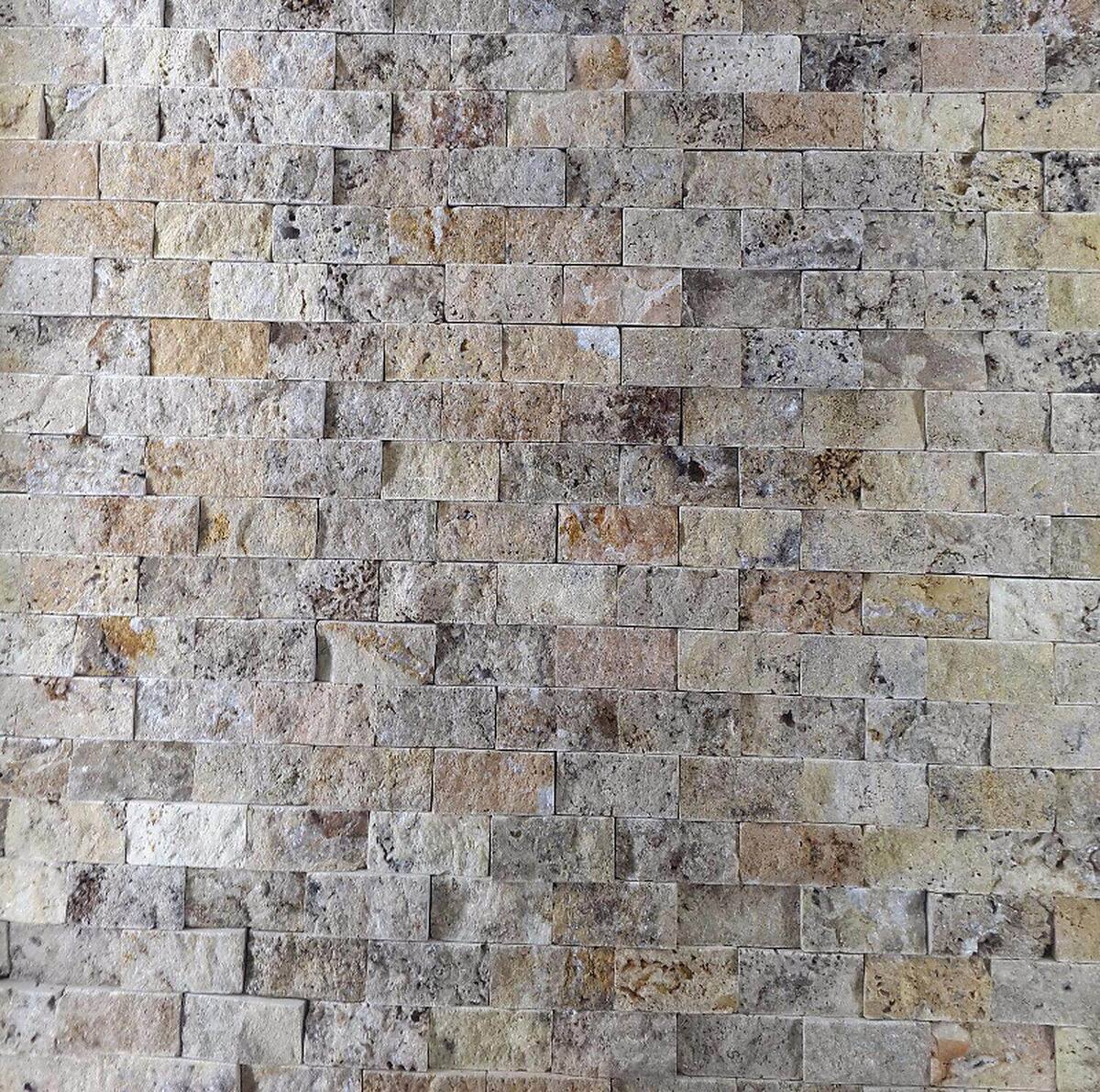
01
Technical data
Our reading on the left, the standard on the right.
Values are typical for current production runs, tested to the European methods named in the last column. Where a harmonised standard sets a limit we quote it next to the value. The report for your material goes out with the order.
| Parameter | Unit | Petrarra | Limit / standard |
|---|---|---|---|
| Apparent density | g/cm³ | 2.45 | EN 1936 — declared value, no minimum |
| Open porosity | % | 2.9 | EN 1936 — declared value |
| Water absorption, atmospheric | % | 1.6 | EN 13755 — declared; Denizli basin runs 0.9 – 2.6 |
| Compressive strength | MPa | 62 | EN 1926 — declared; basin range 44 – 70 |
| Flexural strength, concentrated load | MPa | 11.4 | EN 12372 — declared value |
| Abrasion resistance, wide wheel | mm | 21 | EN 14157 — lower is better; declared |
| Frost resistance | cycles | 48 | EN 12371 — flexural loss under 20 % required |
| Slip resistance, unpolished, dry | USRV | 41 honed / 57 tumbled | EN 14231 — declared per finish |
| Thickness tolerance, calibrated tile | mm | ± 1.0 | EN 12057 class 1 permits ± 1.5 |
| Length and width tolerance | mm | ± 0.8 | EN 12057 class 1 permits ± 1.0 |
| Flatness deviation, 40.6 cm tile | mm | 0.4 | in-house reject above 0.6 |
| Reaction to fire | class | A1 | EN 13501-1 — natural stone, without testing |
| Filling material | — | Resin + cement, colour matched | unfilled supplied for external use |
Denizli stone is not one material. The values above are typical for the Ivory and Classic travertine range; Country Classic and Walnut are denser and read differently on porosity and absorption, and the marble and onyx programme is a separate sheet. Ask for the material-specific report.
Full technical table →02
Where we sit in the window
Every tile passes. The margin is what you are buying.
CE marking on natural stone is a declaration, not a grade — two suppliers can both be compliant and ship completely different floors. What separates them is the distance between the reading and the point where a complaint starts: the tolerance a tiler feels under a 2 m straightedge, and the absorption that decides whether a terrace survives the third winter.
- Thickness tolerance, calibrated tile1mm0limit max 1.5 mm · EN 12057 class 1 — ± 1.5 mm2
Measured on a jig at four points per tile, after calibration. EN 12057 class 1 permits ± 1.5 mm; the half millimetre is what a tiler feels under a straightedge across 400 m².
- Water absorption at atmospheric pressure1.6%0limit max 2.6 % · Denizli basin upper end 2.6 %3.2
EN 13755. Published values for Denizli travertine run 0.9 to 2.6 % depending on the material; the figure shown is typical for the Ivory and Classic range. The measured value for your material is issued with the order.
- Frost resistance48cycles0limit min 20 cycles · in-house floor 20 cycles60
EN 12371, freeze-thaw to a flexural strength loss below 20 %. Tested unfilled, because that is how the material belongs outdoors. Cycle count is confirmed per material on the order report.
- Flatness deviation, 40.6 cm tile0.4mm0limit max 0.6 mm · in-house reject above 0.6 mm1
Checked against a master plate on every calibration batch. A bowed tile cannot be fixed with adhesive; it is rejected before it is packed.
Figures are typical values for the Denizli basin and for our current production runs. A material-specific test report is issued with every order and referenced by block number. Where a value decides a specification — absorption for external use above all — ask for the report before you specify.
03
Container loading
How much stone goes in a box, before you ask.
Stone is weight-bound cargo, almost without exception. The figures below are calculated from finished weight per square metre plus crate, against the payload the box can legally carry — not against its volume, which you will never reach.
| Item | Pack | kg / m² | 20 ft | 40 ft | 40 ft HC | 45 ft | Truck |
|---|---|---|---|---|---|---|---|
| Honed & filled tile, 12 mm | wooden crate on pallet | 31 | 760 m² | 820 m² | 820 m² | 850 m² | 760 m² |
| Honed & filled tile, 18 mm | wooden crate on pallet | 46 | 515 m² | 555 m² | 555 m² | 575 m² | 515 m² |
| Tumbled tile, 12 / 15 mm | wooden crate on pallet | 35 | 675 m² | 730 m² | 730 m² | 755 m² | 675 m² |
| Slab, 2 cm | A-frame bundle | 51 | 465 m² | 500 m² | 500 m² | 520 m² | 465 m² |
| Slab, 3 cm | A-frame bundle | 76 | 310 m² | 335 m² | 335 m² | 350 m² | 310 m² |
| Split-face panel, 15 – 30 mm | carton on pallet | 55 | 430 m² | 465 m² | 465 m² | 480 m² | 430 m² |
| Sinks & shower trays | individual crate | 45 / pc | 395 pc * | 790 pc * | 870 pc * | 910 pc * | 700 pc * |
| Raw block | loose, dunnaged | 2,450 / m³ | 9.5 m³ | 10.5 m³ | 10.5 m³ | 11 m³ | 9.5 m³ |
Weight binds, not volume. A 20 ft reaches its payload with more than half the box empty, and a 40 ft carries only about eight percent more stone than a 20 ft while costing far more to move — for tile and slab the 20 ft is almost always the cheaper box per tonne, and the standard shipment. Rows marked * are volume-bound rather than weight-bound. Destination road limits usually bite before the container limit does: check the axle rules at the delivery address, not at the port. Send the format mix and the discharge port and we return an exact stow plan with the quotation.
04
Compliance
The document set an importer opens first.
Natural stone placed on the EU market is sold against a harmonised standard and a Declaration of Performance, and the values in it belong to a specific material from a specific quarry. These are the standards your specification and your DoP will be written against; the test reports for your material go out with the order.
EN 12057
Modular tiles — product standard for calibrated tile, with the declared thickness and dimensional class
EN 12058
Slabs for floors and stairs — applies to the 2 and 3 cm slab range
EN 1469
Slabs for cladding — the standard a façade specification is written against
EN 1341
Slabs for external paving — applies to the unfilled tumbled range in exterior use
CE marking + DoP
Declaration of Performance issued per material and per product line, with the test report numbers
ISPM-15
Heat treatment and stamping of all wooden crates, pallets and A-frames
EN 12440
Denomination of natural stone — commercial name, petrographic name and quarry locality declared together
Send the schedule. We will send the stow plan.
Tell us the formats, the finish, the square metres and the discharge port. You get a unit price, a container loading plan and a date we will hold — usually within two working days.